←Reallytics.ai AReallyticsAgent FoundryPlatform
How it works

From first question to done.

Connecting business systems usually takes three documents and weeks of work: a business requirements document (what the business needs), a high-level design (the overall plan of which systems connect and how) and a low-level design (the exact technical instructions engineers build from), and only then the code. Agent Foundry's agents write each of these for you, check them against your company's standards, and let your experts review and approve every step.

Step by step

What happens behind each request.

01

Share the need

Upload a requirements document, or link a wiki page or ticket.

02

Agents write it

Plan, specification and code, one after the other.

03

Experts approve

Your team reviews each document and asks for changes.

04

Track progress

Dashboards show every project for teams and executives.
Agent Foundry · live
Plan written
All standards met
Code ready
Plan written
How it works with your systems

From business need to working integration.

  • Business requirements
  • Jira & DevOps tickets
  • Confluence pages
  • Your standards
  • Expert feedback
Business need
Working integration
Requirements
Plan
Specification
Code
Approved
Your standards
Expert approval
Audit trail
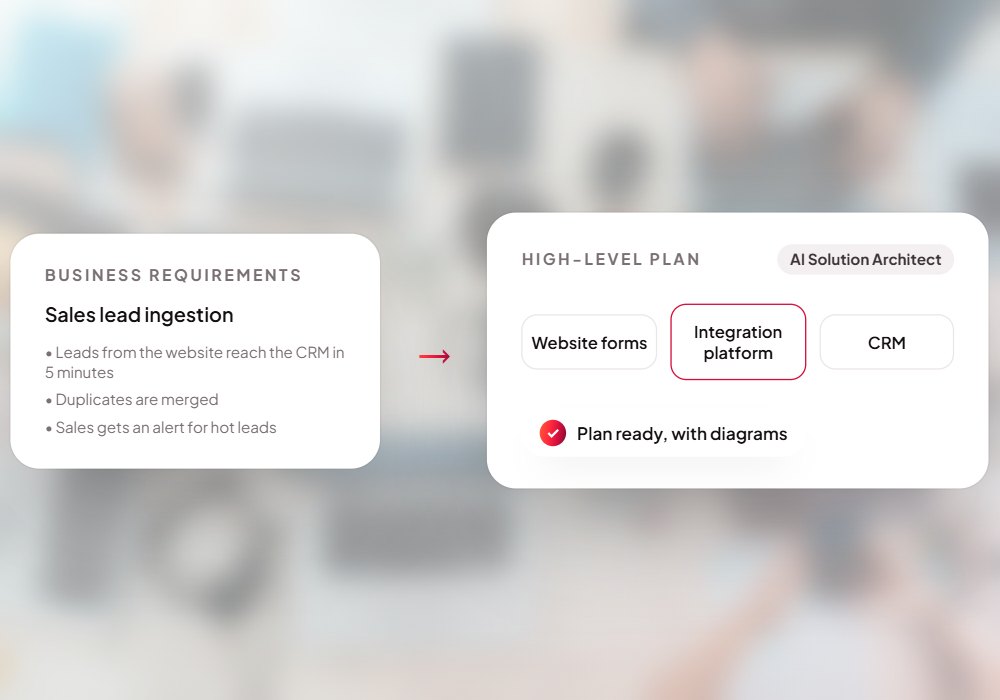
  • A plan with diagrams
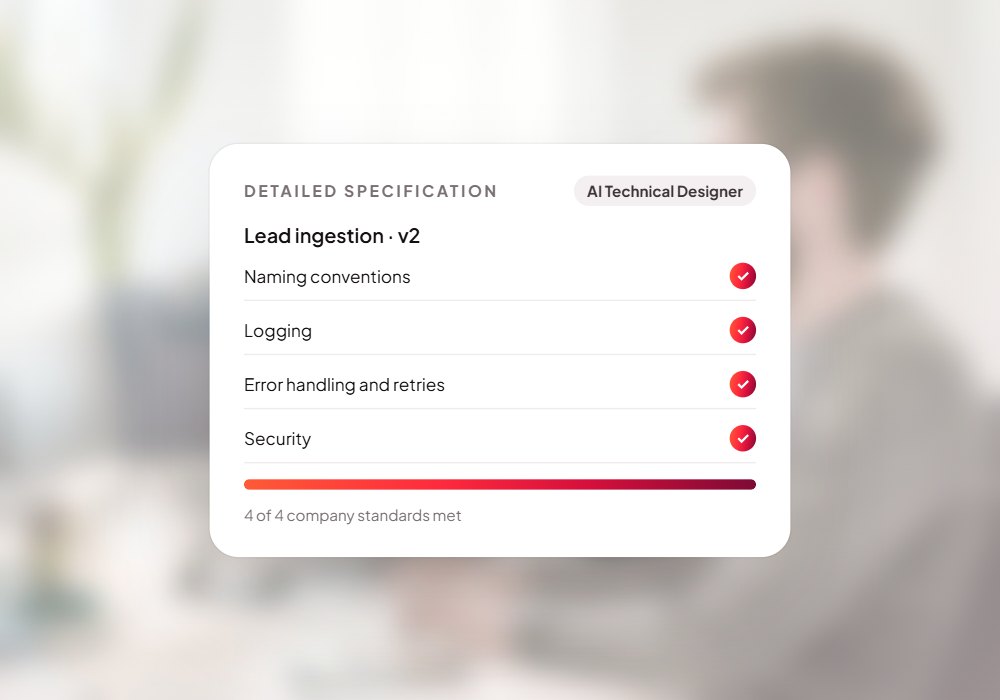
  • Detailed specification
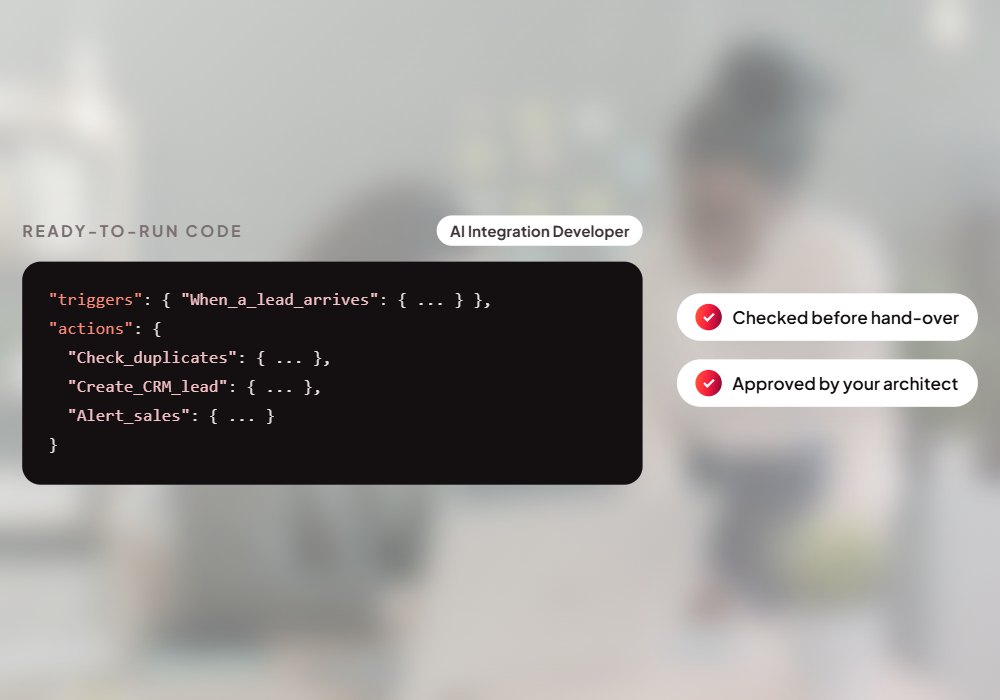
  • Ready-to-run code
  • Executive dashboards
Questions

Before you ask.

What is a BRD, HLD and LLD?

A BRD (business requirements document) says what the business needs. An HLD (high-level design) is the overall plan: which systems connect and how. An LLD (low-level design) is the detailed technical specification engineers build from.

Do people stay in control?

Yes. Every document is reviewed and approved by your experts, and they can ask the agents to change any part.

Where do the documents come from and go?

From uploads, Confluence pages or Jira and Azure DevOps tickets; finished documents can be published back to Confluence.

Put Agent Foundry to work for your team.

We set it up on your own data and systems, test it with your team, and switch it on when you're happy.